Posts

Egg Cookery

Image
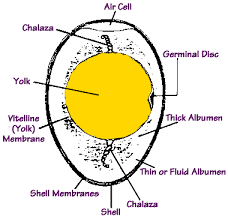
We consume the eggs of birds like hen, goose, turkey, fowls etc. The eggs of only those birds whose meat is eaten are used for cooking purposes. But in India, eggs of hen and ducks are used. Eggs serve a versatile and basic function in diet and in food preparation. They are a pre-packaged container of nutrients in their own disposable shell. Grading of eggs (U.S. weight classes for eggs, minimum weight per dozen for each size) Jumbo 30 oz/ 75 Gms/egg (900 Gms per dozen) Extra large 27oz/68.5 Gms/egg (810 Gms per dozen) Large 24oz/60 Gms/egg(720 Gms per dozen) Medium 21oz/52.5 Gms/egg (630 Gms per dozen) Small 18oz/45 Gms/egg (540 Gms per dozen) Peewee 15oz/37.5 Gms/egg(450 Gms per dozen) N.B.:1 oz=30 Gms approx. Structure of eggs The egg is composed of shell, white and yolk. The egg white forms 2/3rdof the whole egg and the yolk forms 1/3rd. 1. Shell It is the outer hard covering of the egg and is made up of Calcium,Magnesium carbonate and Ca...

Kitchen Hierarchy

Image

Basic Commodity - Fats & Oils

BASIC COMMODITIES – SHORTENINGS, FATS & OILS Fats are solid at room temperature and melt when heated. Those used in cooking include butter, margarine, lard, suet and hydrogenated fat. Oils are liquid at normal temperatures, but solidify at lower temperatures. Those commonly used in cooking are peanut (groundnut/arachide) oil, coconut oil, mustard seed oil, sesame (teel) oil, olive oil and safflower oil. Shortenings are fats that are used in the baking industry and in confectionery.     HYDROGENATION OF OILS The conversion of oil into fat is known as hydrogenation. The process changes the physical properties of the oil. Hydrogenation consists of treating oil under pressure and at a suitable temperature with hydrogen, in the presence of a catalyst, usually nickle. Under these conditions, the unsaturated fatty acids present in the oil combine with the hydrogen. This chemical process brings about a physical change, the liquid oil changing into a solid fat. ...

Fruit Cookery & Classification

FRUITs AND COOKING WITH FRUIT A fruit can be defined as the nurtured ovary of a flower. The fleshy portion is the edible part, though at times, the stone can also be eaten. Some people tend to confuse fruit with vegetable. Tomatoes and eggplant are fruits though they are referred to and are cooked like vegetables because of their low sugar content. On the other hand, Rhubarb is a vegetable but is cooked like fruit, in sugar syrup. Some vegetables are used in sweet dishes. E.g. pumpkin in a pumpkin pie and carrot in a carrot hulwa. There are different types of fruit: - Simple fruit: one fruit from one flower e.g. orange - Aggregate fruits : many fruits from one flower e.g. berries - Pomes : fruits having a central core e.g. apple - Drupes: fruits having a center stone e.g. apricot CLASSIFICATION Very broadly, fruit can be classified as: 1. Fleshy fruit : This group would include apple, banana, pineapple 2. Stone fruit : This group includes mangoes, apri...

Aims & Objectives of Cooking

Aims & Objectives of Cooking Food: 1. Making food safe for consumption – Cooking sterilizes food partially. The growth of bacteria gets restricted at 40oC (104oF). Non-sporing bacteria are killed at temperatures above 60oC (140oF). For example, pasteurization – milk is made safe by holding it at 63oC (145oF) for 30 minutes or at 72oC (161oF) for 15 seconds. Boiling kills living cells. Spore-bearing bacteria take 4-5 hours of boiling to be destroyed. 2. Making food more digestible – Complex foods are split into simpler substances during cooking. The human body can absorb and utilize these more readily. 3. Increasing palatability 4. Making food look better – Heat brings about changes in colour, texture and overall appearance of the food, making it more appetizing. 5 . Introducing variety – A single ingredient may be used in many different ways, cooked by different methods and bring about changes in the meal. 6 . Balancing a meal – Different ingredients ...